Fastener Replacement
Backed-out or overdriven screws get replaced with oversized fasteners and new washers, torqued so the washer seals without crushing.
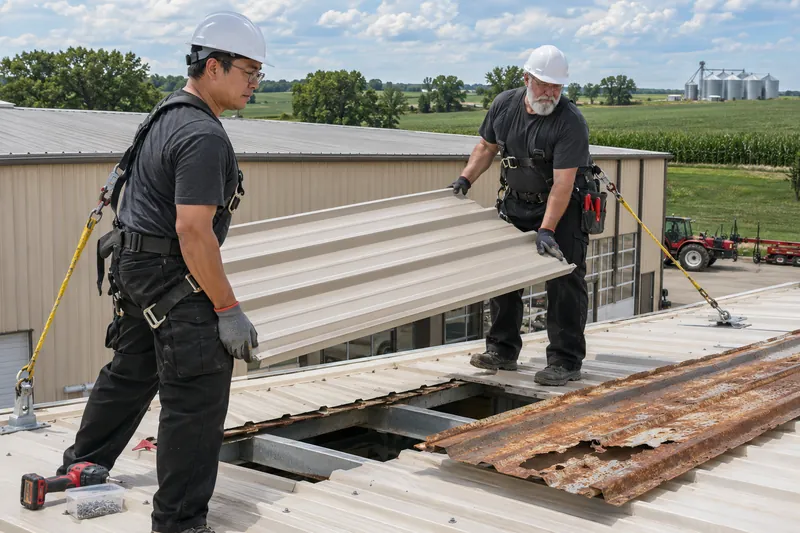
As a Lincoln commercial metal roof repair contractor, we replace failed fasteners, seal open laps, and swap rusted panels on steel roofs.
Every fastener line checked
Panels matched by profile and gauge
Laps cleaned before resealing
Exposed-fastener and standing seam
Lincoln commercial metal roof repair fits steel roofs whose panels are still solid. These checks show when repair holds and when panels need replacing.
| Check | Repair Fits | Look Further |
|---|---|---|
| Panel Steel | Surface rust that cleans back to firm metal | Rust holes at laps and fastener lines |
| Fasteners | Washers cracked or screws backed out | Holes stripped across many rows |
| Laps | Sealant failed at a few side or end laps | Laps separating along most runs |
| Panel Feel | Firm underfoot along the ribs | Panels flexing or sagging between purlins |
| Trim | Loose ridge cap or eave closures | Trim and closures rusted away |
Steel roofs leak in a handful of predictable places. Each row names the symptom, the usual cause, and the repair.
Cracked rubber washers and screws backing out as panels expand and contract through the seasons.
We check every fastener line and replace failed screws with oversized ones and new sealing washers.
Lap sealant that has dried out, or stitch screws that worked loose and let the lap open.
We clean out old sealant, stitch the lap tight, and reseal it with butyl tape or compatible sealant and fabric.
Rust that has eaten through at laps, fastener holes, or where condensation drips from inside.
We match the panel profile and gauge, fasten the new panel into the existing laps, and seal each lap.
Heat and vibration loosening flashing around exhaust stacks, vents, and skylight frames.
We reflash the penetration with metal and sealant rated for that heat.
Metal roof repairs fall into four kinds of work, and most buildings need two or more of them.
Backed-out or overdriven screws get replaced with oversized fasteners and new washers, torqued so the washer seals without crushing.
Open side and end laps are cleaned out, stitched tight, and sealed with butyl tape or sealant and reinforcing fabric.
Panels rusted through or bent by hail come out, and new ones of the same profile and gauge go in, lapped and sealed.
Ridge cap, eave closures, wall flashing, and curb flashing get refastened or replaced where wind or rust has opened them.
These are the metal roof details we find on the first walk, and how they look once the repair is done.
Call and tell us where the drips land and whether they follow a rib or a lap. That detail points us to the fastener row or lap to check first.
Metal roof repairs follow four steps, from the first fastener check to the final record.
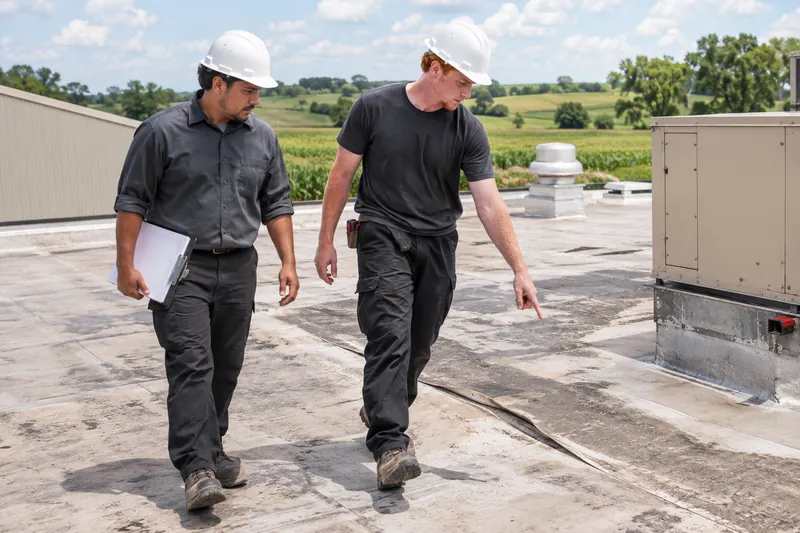
We walk each fastener row and lap, check panels for flex near the purlins, and look at the panel underside from inside the building where we can reach it.
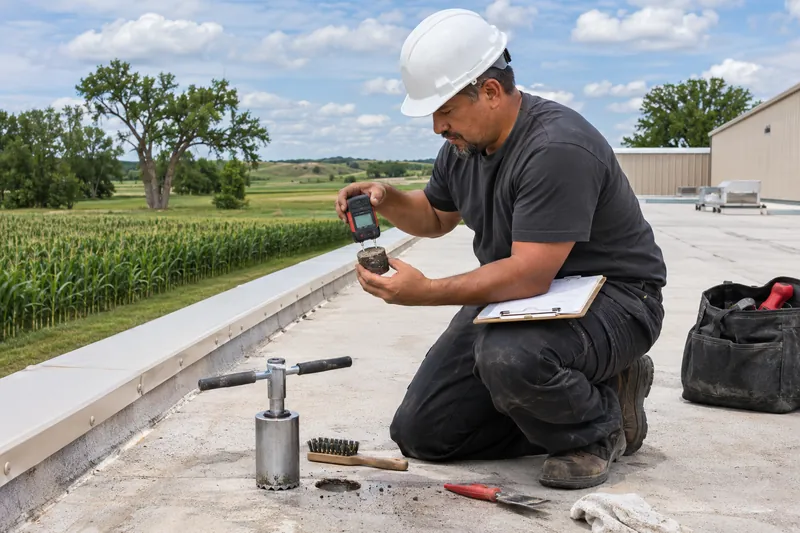
Drips inside a metal building can be condensation. Moisture readings and the drip pattern show which spots are true leaks before any money goes into them.
Failed screws come out, laps get stitched and sealed, and rusted panels are swapped for matching ones, one run of the roof at a time.
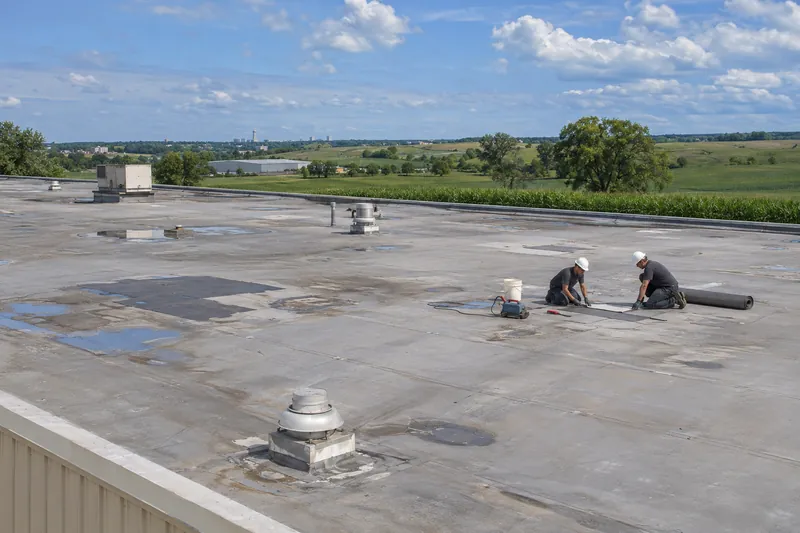
Debris and old fasteners leave with the truck, and the repair record lists every lap, panel, and fastener row that was fixed.
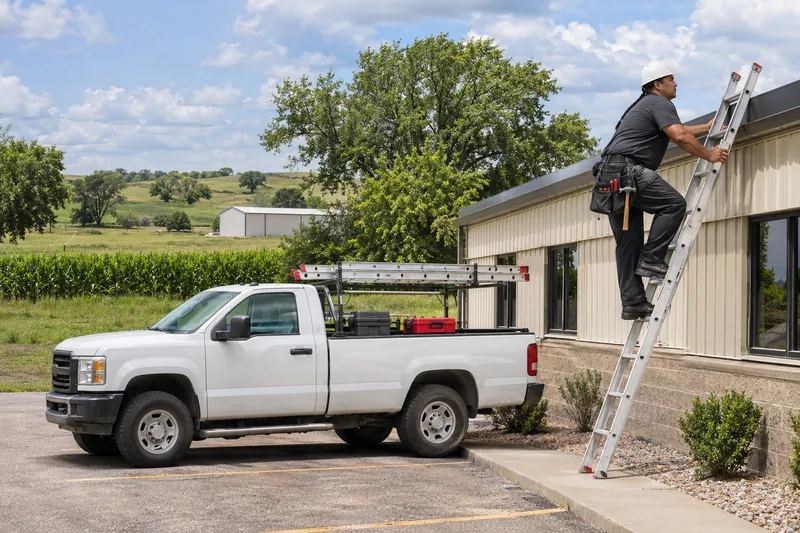
Metal buildings often need more than panel work. These services cover the rest.
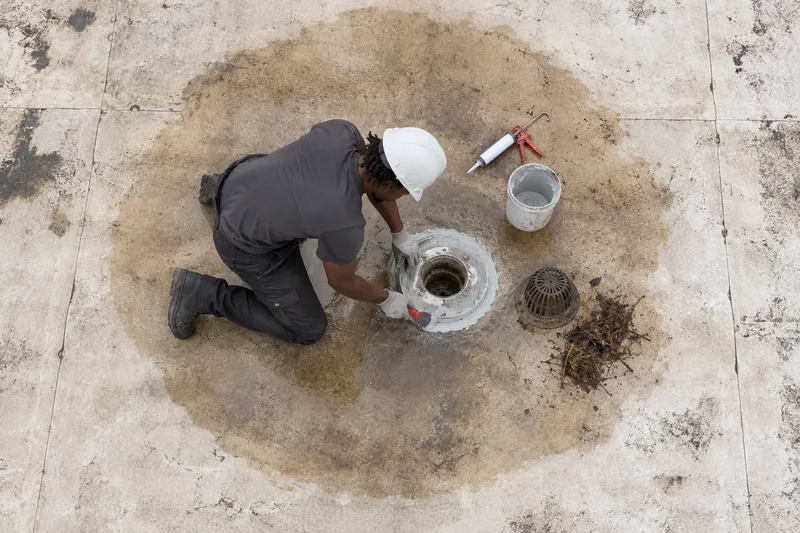
Many metal buildings have a low-slope section or an office addition with a membrane roof that needs its own repairs.
Lincoln flat roof repair →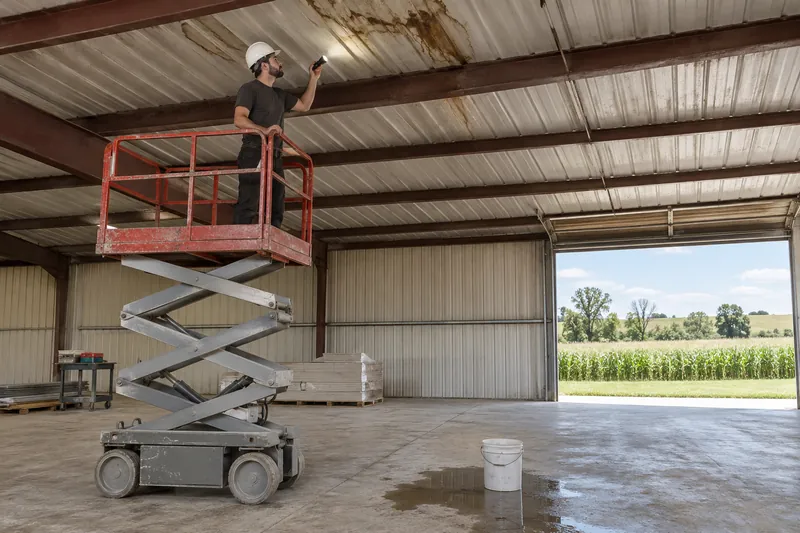
Leak tracing separates true roof leaks from condensation and finds the lap or fastener letting water in.
Lincoln commercial roof leak repair →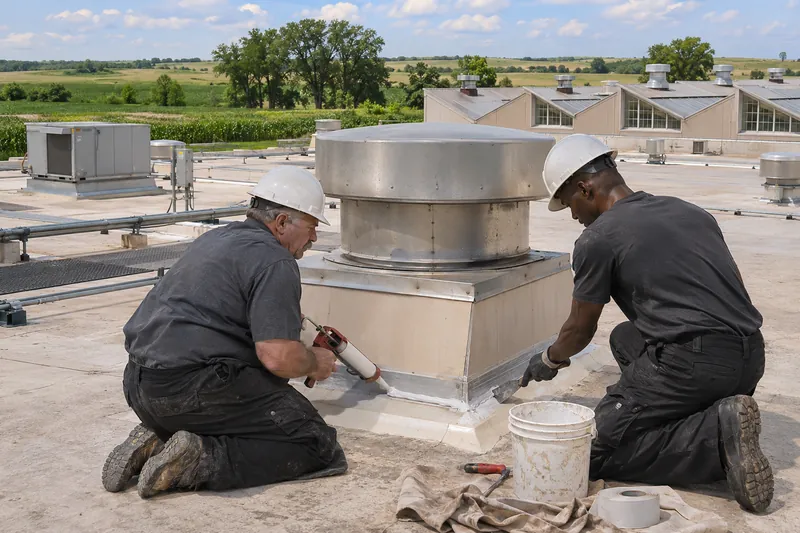
Plants with metal roofs carry exhaust stacks and vents that need flashing built for heat and vibration.
Lincoln industrial roof repair →Answers to what owners of Lincoln metal buildings ask about leaks, fasteners, and rust.
Fasteners and their rubber washers. Over years of heating and cooling, washers dry out and crack and screws back out of the purlins. Open side laps and end laps come next, followed by flashing around curbs and walls. When we trace a metal roof leak, every fastener line near the drip gets checked before anything else.
Each leaking hole gets an oversized screw with a new sealing washer. A hole that is stripped or stretched into an oval gets a sealant or metal patch first, and empty holes left by removed equipment are sealed and patched.
Torque matters, since an overdriven screw crushes its washer and starts a new leak, so each one is set to seal.
Replace the panel once rust has eaten through it or the steel flexes when you step on it. Holes forming at laps and fastener lines are the other sign. Surface rust can be cleaned and treated, while perforated steel can no longer hold a seal.
New panels match the old profile and gauge and are fastened and sealed into the existing laps.
Seam repair starts by cleaning failed sealant and debris out of the lap. Where the seam has opened, stitch screws pull it tight again, then butyl tape or a compatible sealant with reinforcing fabric seals it. On standing seam roofs, seams that wind has pulled loose get re-crimped, and the clips under them are checked.
Plant roofs see the most trouble around exhaust stacks, vents, and skylights, where heat and vibration work flashing loose. Condensation from process areas can also rust panels from the underside. We look at the panel underside where we can reach it, replace corroded sections, and reflash each penetration with metal and sealant chosen for the heat at that spot.
Wind gets under edges. Once a membrane edge, a piece of flashing, or a run of metal trim lifts, every gust pries it further. Corners and perimeters carry the highest wind loads, so damage starts there. After a windstorm we check perimeter edge metal, coping, seams near the corners, and fasteners on metal panels.
Tell us what you see along the panels, laps, or trim, and we will set a time to inspect the roof and price each repair for free.