How to Find a Roof Leak in a Warehouse
Tracing starts inside: drip points get marked and the deck and joists checked for staining, then the roof above and upslope of each mark gets a close look.

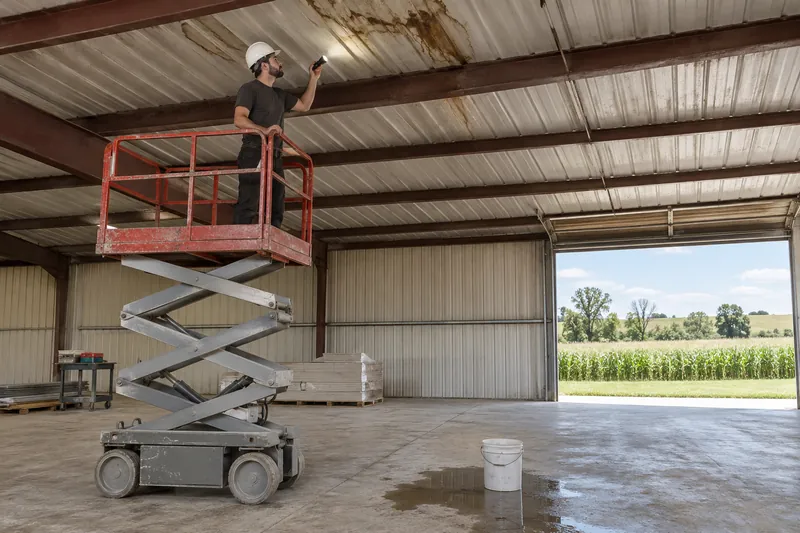
As a Lincoln commercial roof leak repair contractor, we trace water from the drip inside to its entry point on the roof, then repair that detail.
Drip points marked inside first
Entry traced upslope on the roof
Water tests confirm the source
Temporary fixes logged for follow-up
Lincoln commercial roof leak repair fits most active leaks. These checks show when tracing and repair solve it and when the roof needs a wider look.
| Check | Repair Fits | Look Further |
|---|---|---|
| Drip Pattern | One or two drip points that return in rain | Drips at many points across the building |
| Timing | Leaks only in heavy or wind-driven rain | Leaks in every rain, light or heavy |
| Interior Signs | Stains near one bay or wall | Stains and wet tile across most of the ceiling |
| Roof Surface | Membrane or panels intact away from the leak | Splits, rust holes, or blisters everywhere |
| Condensation | Drips stop when the weather is dry | Drips on cold, dry days, which points to condensation |
Leaks rarely show up right under their source. Each row pairs a symptom inside the building with where the water usually enters.
A weak lap or flashing that only opens when water rises or rain blows sideways.
We look above and upslope of the drip at laps, flashing, and drains that sit low on the roof.
Curb flashing loosened by vibration, open cabinet panels, or a condensate line dripping at the curb.
We check the curb, counterflashing, pipe boots, and the unit cabinet before reflashing.
Bruised membrane, cracked flashing, or punctured coatings that start leaking weeks after the storm.
We mark each impact area, seal active leaks, and record findings you can share with your insurer.
Water running along deck flutes or purlins before it falls, so the entry sits well away.
We follow the deck flutes upslope from inside, then inspect seams and penetrations above that line.
Leak repair is part detective work and part roof repair. These are the four parts of the job.
Tracing starts inside: drip points get marked and the deck and joists checked for staining, then the roof above and upslope of each mark gets a close look.
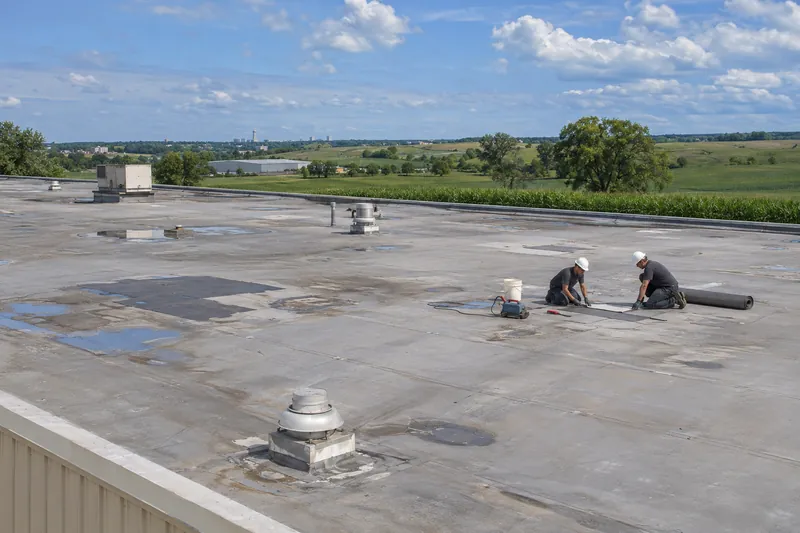
Hose testing one detail at a time, from low to high, confirms which lap, curb, or drain lets water in before the repair goes on.
Open seams get sealed and damaged spots covered to stop water fast, and each temporary fix is logged with the permanent repair it needs.
Seams are welded or taped, flashing rebuilt, and fasteners replaced with materials that match the roof system at the leak.
Leak repair shows up inside first. Here is what the building looks like before and after the entry point is fixed.
Call and tell us where the drip lands, when it started, and what the weather was doing. Photos of the stain help us find the source faster.
Finding the leak is most of the job. These four steps get a building from drip to dry.
We start inside at the drip, mark it, and check the deck above. Then we walk the roof above and upslope of each mark, looking at seams, curbs, and drains.

A water test or moisture reading confirms the entry point. Wet insulation around it gets found now, so the repair covers everything the leak touched.

The lap, flashing, or fastener at fault gets repaired with matching materials, and wet board around it is cut out and replaced.
After the next good rain, the drip point gets a second look from inside. The repair record notes the roof entry point for future reference.
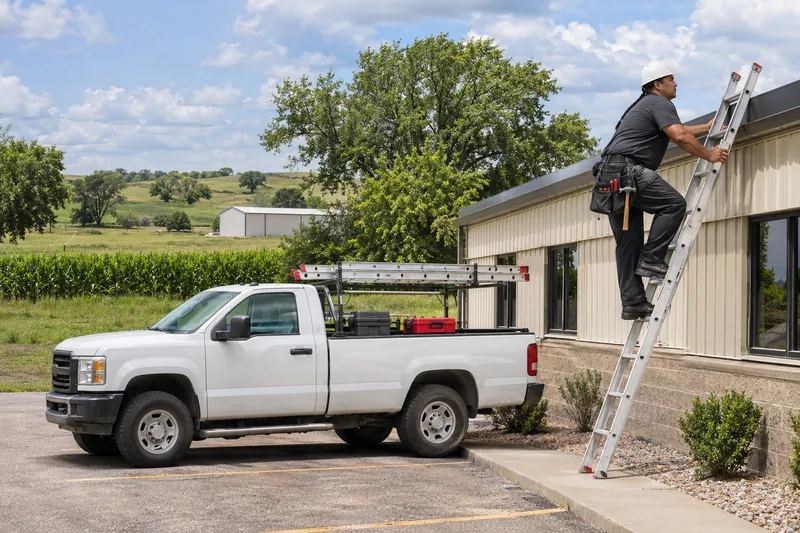
Once the source turns up, the repair usually falls under one of these services.
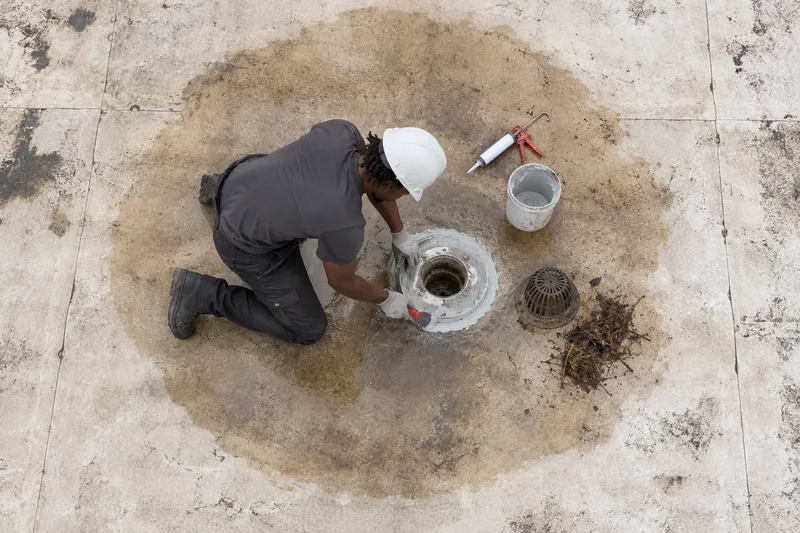
Leaks at seams, drains, and parapets on membrane roofs are fixed under flat roof repair, with patches matched to the membrane.
Lincoln flat roof repair →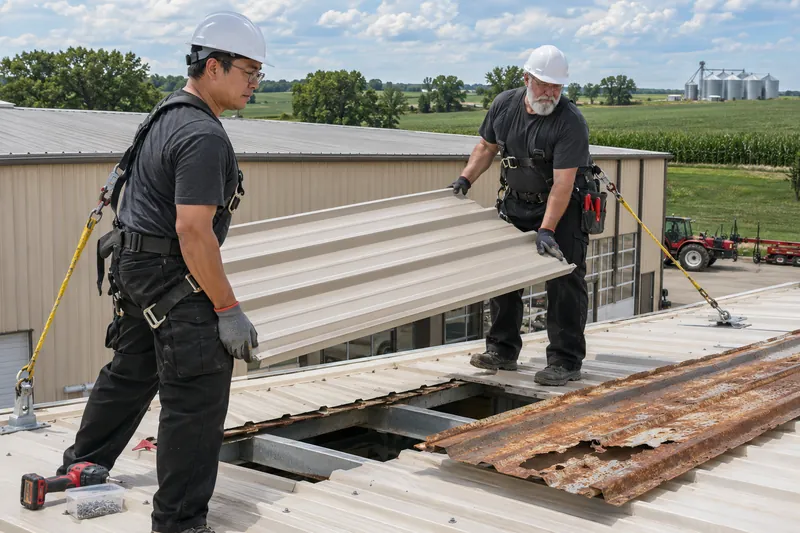
Drips that follow a rib or lap on a steel roof lead to fastener and lap repairs on the panels above.
Lincoln commercial metal roof repair →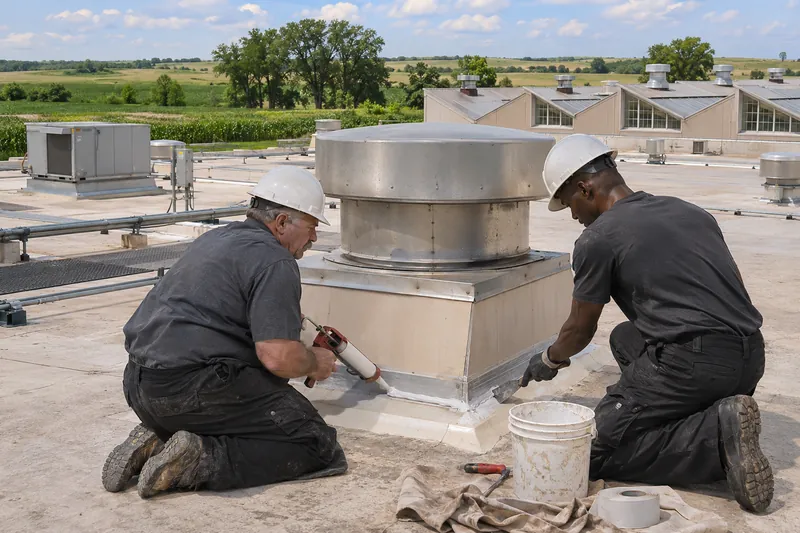
Plant roofs leaking around fans, stacks, and pipe supports need repairs suited to heat and residue.
Lincoln industrial roof repair →What Lincoln owners ask when water starts coming through the ceiling.
No, a leak in heavy rain means the roof has a defect, even if it stays dry in light rain. Heavy rain raises water levels on the roof and drives water sideways into laps and flashing, which opens a weak spot that light rain never reaches.
Finding and fixing it early keeps the damage from spreading into insulation and the deck.
Inside first. We mark every drip point and look for staining on the deck and joists, because water often runs along deck flutes before it falls. Then we inspect the seams and penetrations above and upslope of each mark. A water test on the suspected detail confirms the source before the repair goes on.
Three sources cover most of these leaks: the curb flashing, the unit's own sheet metal panels, and condensate lines. Vibration and roof movement pull curb flashing loose over time, and wind-driven rain can get past loose cabinet panels. We check the curb, counterflashing, pipe penetrations, and the cabinet itself before deciding what to repair.
Take dated photos of the leaks and any roof damage you can see from the ground, then schedule an inspection. Hail can bruise membrane, crack flashing, and puncture coatings in ways that leak weeks later. We mark each impact area, make temporary repairs to active leaks, and write up findings you can pass to your insurer.
Aging metal panels on grain storage buildings tend to leak at ridge vents, eave closures, and fastener lines. Dust and grain debris hold moisture against the roof, which speeds up rust. Condensation inside these buildings can also drip and look like a roof leak, so we sort true leaks from condensation before planning any repair.
Tell us where the water shows up and when. We will trace the leak, repair the entry point, and price the work in a free estimate.