Flat Roof Repair
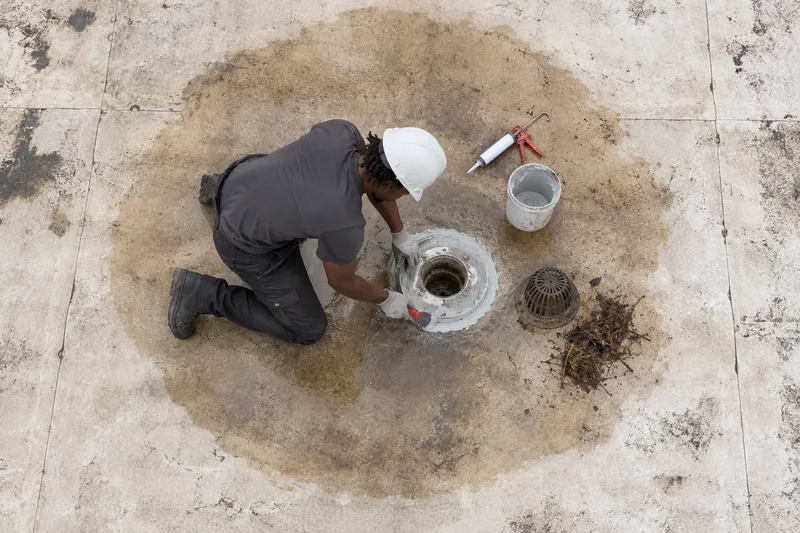
TPO, EPDM, and modified bitumen roofs on offices, retail, and warehouses. The work covers seams, drains, ponding, and wet insulation, with every patch matched to the membrane on the roof.
Lincoln flat roof repair →
We offer commercial roof repair services in Lincoln for flat, metal, leaking, and industrial roofs, each starting with an inspection of the roof itself.
Our commercial roof repair services in Lincoln are grouped by roof and problem. Each card says which buildings and conditions the service fits.
TPO, EPDM, and modified bitumen roofs on offices, retail, and warehouses. The work covers seams, drains, ponding, and wet insulation, with every patch matched to the membrane on the roof.
Lincoln flat roof repair →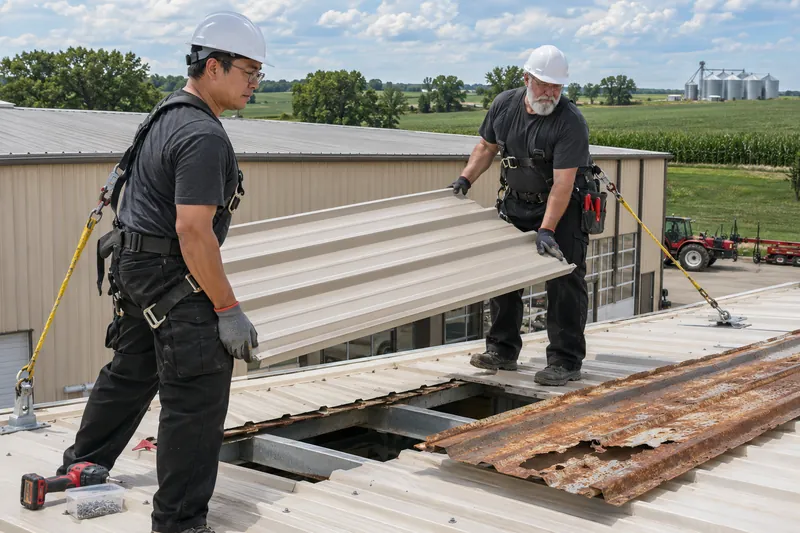
Exposed-fastener and standing seam steel roofs on shops, storage, and farm supply buildings. Fasteners get replaced, laps resealed, rusted panels swapped, and loose trim refastened.
Lincoln commercial metal roof repair →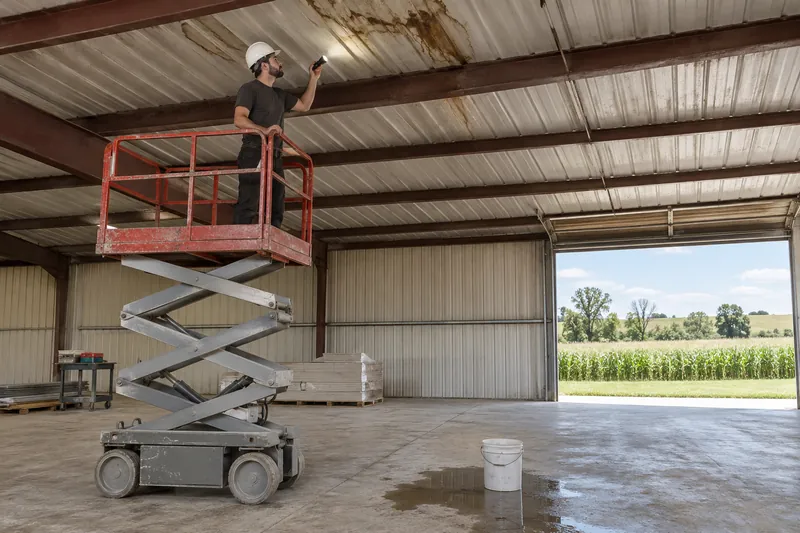
Active leaks with an unclear source on any roof system. Tracing starts at the drip inside, water testing confirms the entry point, and the permanent repair goes on that detail.
Lincoln commercial roof leak repair →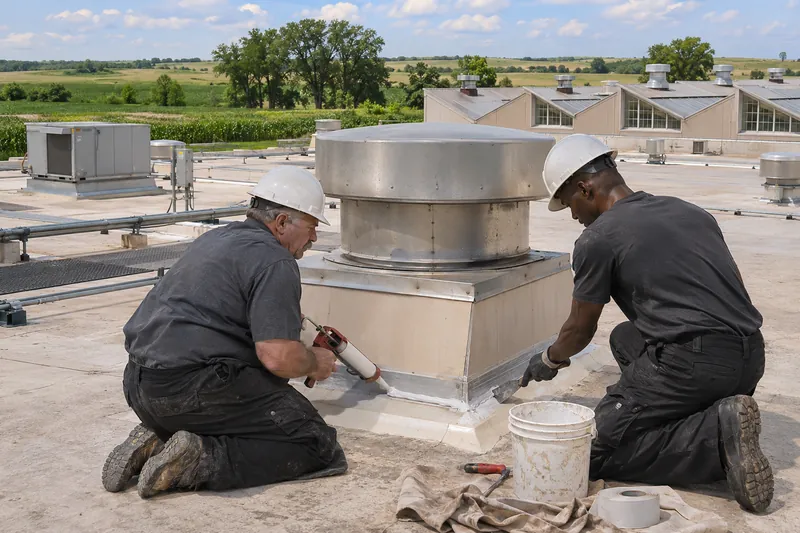
Plant and mill roofs crowded with fans, stacks, and curbs. Flashing gets rebuilt for heat and residue, wet bays are repaired in sections, and upkeep is scheduled around production.
Lincoln industrial roof repair →Match what you see to the service that covers it. Still unsure? The inspection sorts it out, and many buildings end up needing two of these services.
| What You See | Roof Type | Start With |
|---|---|---|
| Water sitting near drains for days | Membrane | Flat roof repair |
| Drips along a rib or panel lap | Metal panel | Commercial metal roof repair |
| A drip with no clear source above it | Any system | Commercial roof leak repair |
| Leaks around exhaust fans or stacks | Plant roof | Industrial roof repair |
| Split membrane along a parapet | Membrane | Flat roof repair, with new base flashing |
| Rust holes at panel ends | Metal panel | Panel replacement under metal roof repair |
| Wet ceiling tile in one warehouse bay | Any system | Leak tracing, then the matching repair |
Call and describe what you see on the roof or the ceiling. We will tell you what the inspection checks and set a time to look at the roof.
Each service follows the same four steps, whatever roof sits on the building.
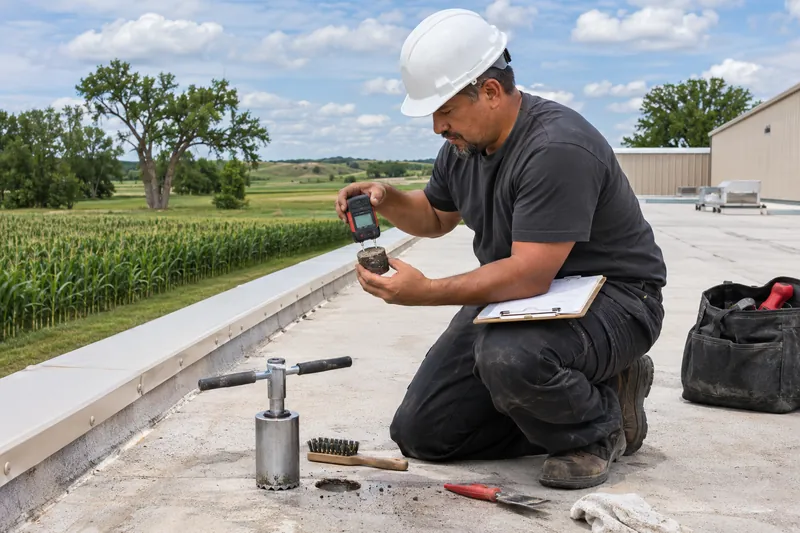
The visit covers the roof field, seams, flashing, drains, and equipment curbs, plus a look at the ceilings and the underside of the deck from inside the building.
Moisture readings and the condition of the membrane or panels tell us which areas take a repair and which have gone past it, so money goes where it lasts.
Repairs go in one roof area at a time with matching materials, so the rest of the roof stays sealed while work moves along the building.
Photos and notes for each repaired spot on the roof come to you once the work is done, ready for the next inspection, a budget plan, or an insurance file.
What owners and facility managers ask before choosing a repair service for a Lincoln building.
Start with what you see. Ponding, split seams, and drain trouble on a membrane roof point to flat roof repair, while drips along ribs and laps on steel point to metal roof repair. A drip with no clear source calls for leak tracing, and roofs crowded with plant equipment fall under industrial repair. The inspection confirms the fit.
Yes. Plenty of Lincoln buildings have a metal shop with a membrane-roofed office, or a warehouse with fans on the roof. One inspection covers every roof section, and the repair list groups work by area, so a single estimate covers all of it.
Low-slope membrane roofs such as TPO, EPDM, and modified bitumen, plus exposed-fastener and standing seam metal roofs. Older built-up roofs with gravel get repairs too. Each system needs its own patch or panel material, so the first step on any roof is confirming what system is up there.
Most repair work happens while the building stays open. Work is planned around loading docks, entrances, and rooftop equipment that has to keep running, and noisy or messy steps can be timed for off hours.
Interior protection goes up under any area where we cut into the roof, and we tell you ahead of time which spaces sit below each day's work.
Each job ends with a repair record: photos of every spot before and after, its location on the roof, and the work done there. Owners use it to track recurring problem areas on the roof, plan budgets, and support insurance claims after storms.
It looks at the parts of a roof that fail first: seams and laps, flashing at walls and curbs, drains and scuppers, fasteners on metal panels, and the deck where it shows from inside. Moisture readings find wet insulation that looks fine from above. Each problem is photographed and tied to its spot on the roof.
Many can. Metal fastener and flashing work and some membrane repairs go ahead in cold, dry weather, while adhesives, sealants, and coatings each list a minimum temperature on the product sheet. When a permanent repair has to wait for warmer days, a temporary fix stops the water in the meantime.
If moisture readings show wet insulation under a large share of the roof, or the membrane or panels have failed across the field, we say so and walk you through what the inspection found. Repairs that would keep coming back to the same areas are flagged before you spend money on them.
Tell us which roof is giving you trouble. We will inspect it and send a free estimate that prices each repair on its own line.