Industrial Roof Inspection
Twice-yearly walks plus checks after big storms cover drains, penetrations, flashing, seams, and the roof around every piece of equipment.
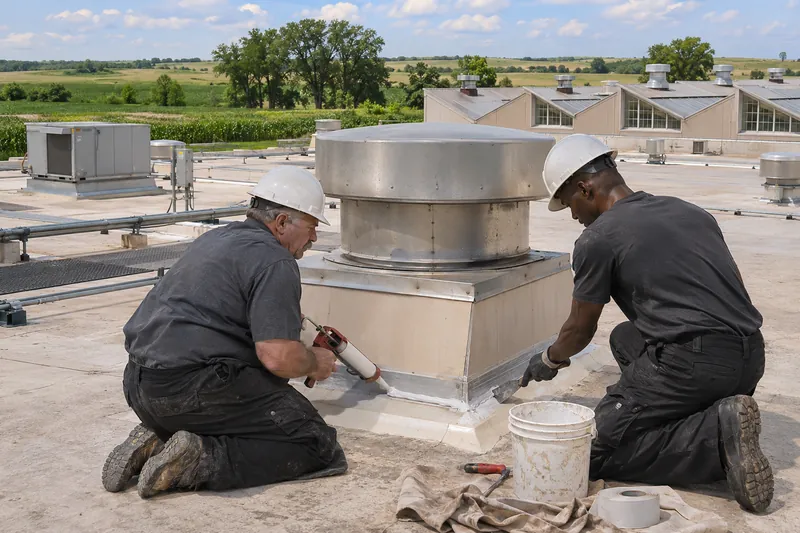
As a Lincoln industrial roof repair contractor, we repair large roofs around exhaust fans, stacks, conduit, and heavy equipment curbs while production keeps running.
Fan and stack flashing rebuilt
Site safety rules followed
Work timed around production
Repair records by roof area
Lincoln industrial roof repair covers big roofs with many penetrations. These checks show when repair fits and when a section needs more.
| Check | Repair Fits | Look Further |
|---|---|---|
| Penetrations | A few curbs, fans, or stacks leaking | Flashing failing at most penetrations |
| Residue | Grease or oil limited to the area by a fan | Residue softening membrane across sections |
| Foot Traffic | Worn paths with scuffs near equipment | Membrane torn through along service routes |
| Insulation | Wet readings near a few penetrations | Wet readings across whole bays |
| Deck | Firm deck around equipment supports | Rusted or deflected deck under equipment |
Industrial roofs fail where equipment meets the roof. Each row pairs a symptom with its cause and our repair.
Grease and residue from fan discharge softening the membrane, plus flashing too short at the curb.
We clean the area, use membrane rated for that exposure, re-secure the curb, and raise flashing to proper height.
Vibration from heavy units working curb flashing and counterflashing loose.
We rebuild the curb flashing, add new counterflashing, and fasten it to resist the vibration.
Water entering at one of many pipe supports, conduit runs, or stack collars spread across a big roof.
We trace the water across the roof, then repair each entry point with materials suited to its exposure.
Repeated foot traffic and dropped tools scuffing and puncturing membrane along service routes.
We patch the damage and add walkway pads so service techs stay on protected paths.
Industrial roof work splits into four kinds of jobs, and most plants need a mix of them.
Twice-yearly walks plus checks after big storms cover drains, penetrations, flashing, seams, and the roof around every piece of equipment.
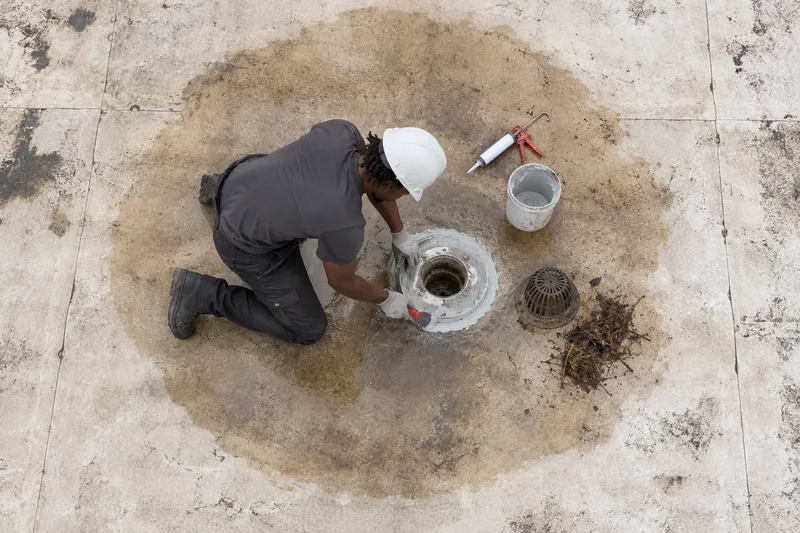
Scheduled drain cleaning, sealant checks at flashing and penetrations, and small repairs keep minor problems from growing into leaks.
Curbs, fans, stacks, and pipe supports get new flashing at proper height with materials rated for heat, oil, or chemical exposure.
Wet insulation and damaged membrane in one bay get cut out and replaced while the rest of the roof stays in service.
Here is how equipment areas on an industrial roof look before the repair and after it.
Call and tell us which bay is leaking and what equipment sits on the roof above it. We plan the visit around your shifts and safety rules.
Industrial repairs follow four steps built around site safety and production schedules.
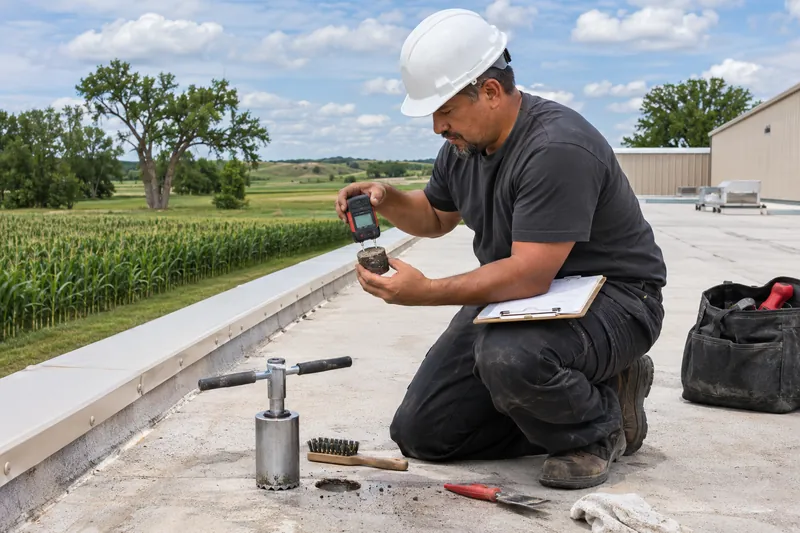
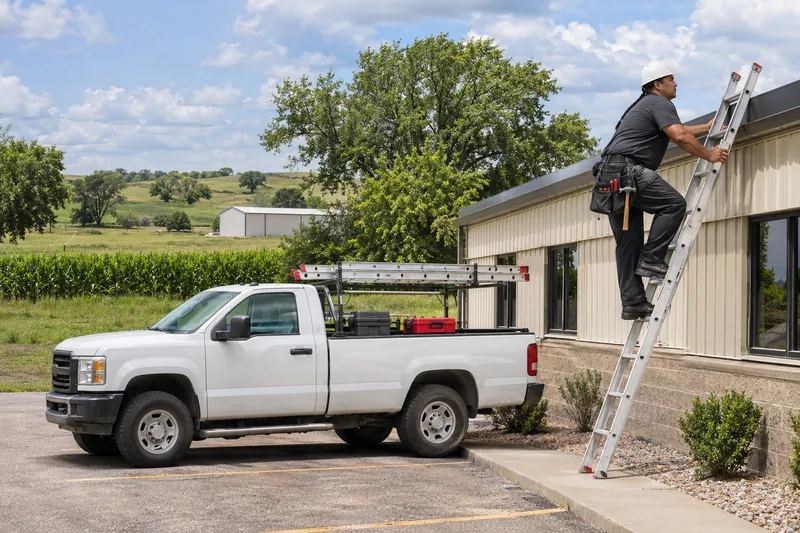
We check in with your safety contact, then walk drains, penetrations, flashing, and seams. Moisture readings and a core cut where needed show wet insulation near equipment.
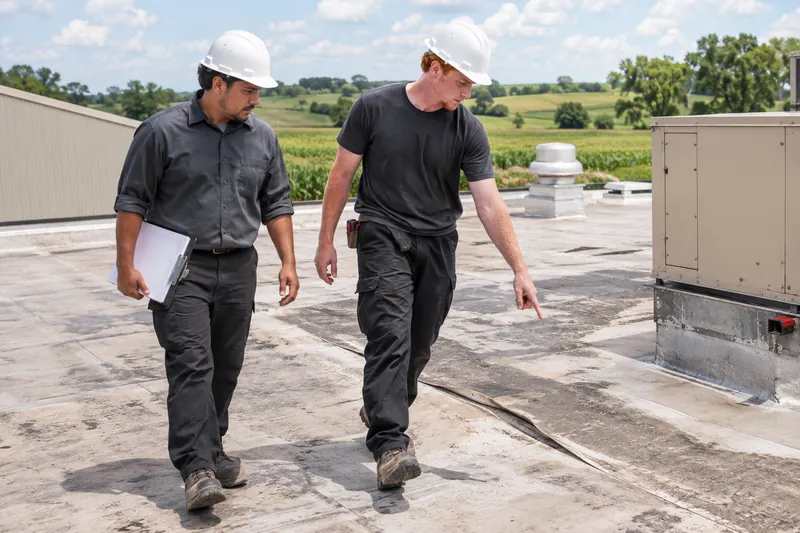
The repair list is grouped by roof area so work can be timed around shifts, shutdowns, and equipment that has to keep running.
Flashing, membrane, and supports are repaired with materials chosen for the heat, oil, or chemical exposure at each spot on the roof.
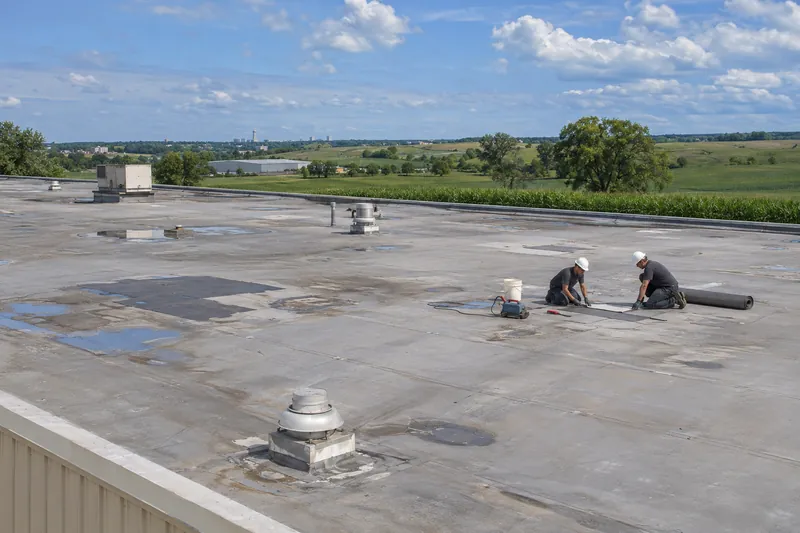
Each repair goes into a record by roof area, and spring and fall checks get on the calendar to catch freeze and storm damage.
Plant roofs usually need more than one kind of repair. These services cover the rest.
Office and warehouse wings with membrane roofs get seam, drain, and ponding repairs under flat roof repair.
Lincoln flat roof repair →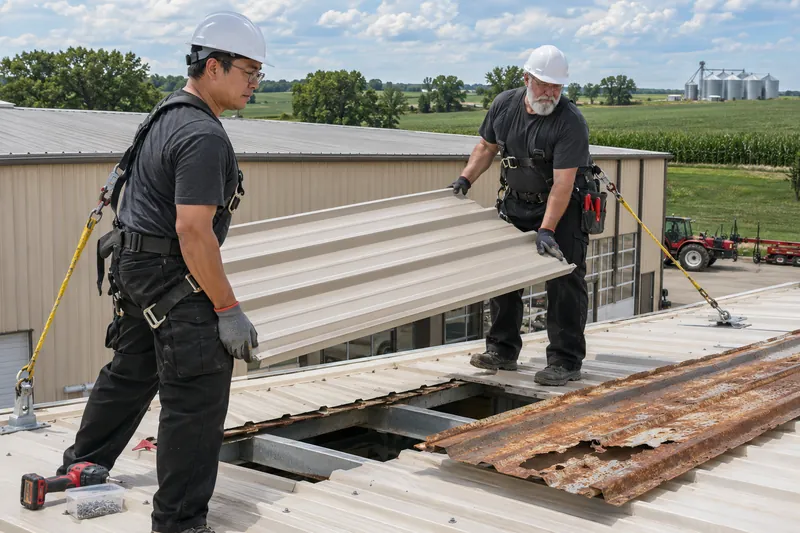
Metal-roofed bays and storage buildings need fastener, lap, and panel work on the steel itself.
Lincoln commercial metal roof repair →
Drips over a line or stored product call for leak tracing before any patch goes down.
Lincoln commercial roof leak repair →Answers for Lincoln plant managers about leaks, fans, upkeep, and codes.
Tracing water across a big roof crowded with penetrations, then fixing each entry point. Industrial roofs carry exhaust stacks, conduit, pipe supports, and heavy equipment, and each one strains the flashing around it. We work around production schedules, follow your site safety rules, and pick repair materials that hold up to the heat, oil, or chemicals at that spot.
The work starts at the fan curb. We measure flashing height and look for grease or residue on the roof, since discharge can soften some membranes. The area gets cleaned, and the patch uses material rated for that exposure. Loose curbs are re-secured, and short flashing is replaced at proper height.
Maintenance means scheduled inspections, drain cleaning, sealant checks at flashing and penetrations, and small repairs made before they grow. Spring visits catch freeze damage from the winter, and fall visits catch summer storm damage. A running record of each roof area and its repairs makes recurring problems easy to spot.
At least twice a year, in spring and fall, plus after major hail or wind storms. Roofs with heavy foot traffic, exhaust discharge, or process equipment benefit from more frequent checks. Each visit covers drains, penetrations, flashing, seams, and the roof around rooftop equipment.
Nebraska's state building code in Neb. Rev. Stat. 71-6403 adopts the 2018 editions of the International Building Code and International Existing Building Code. Lincoln has adopted the 2021 editions of both, with local amendments, for work inside the city. Lincoln Building and Safety can confirm which edition and amendments apply to a given roof repair.
Tell us about the roof, the equipment on it, and your shift schedule. We will plan an inspection and give you a free estimate for each repair.