Flat Roof Patch vs Replacement
Small punctures, split seams, and torn flashing on flexible membrane take a patch of the same system. Brittle or saturated membrane around the damage calls for replacing that section.

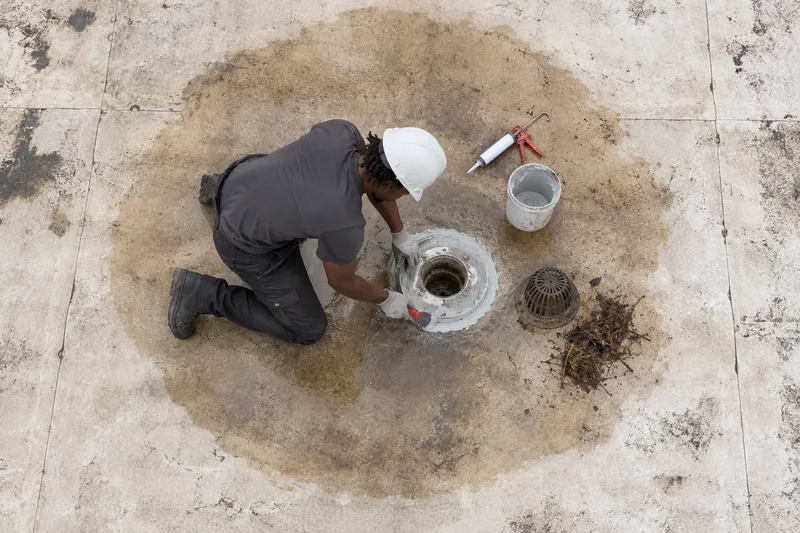
As a Lincoln flat roof repair contractor, we fix open seams, clogged drains, and ponding areas on TPO, EPDM, and modified bitumen roofs.
TPO, EPDM, and modified bitumen
Drains tested on every visit
Wet insulation found before patching
Patches matched to the membrane
Lincoln flat roof repair works best when damage sits in certain areas. These checks show whether a repair fits or the roof needs a wider look.
| Check | Repair Fits | Look Further |
|---|---|---|
| Membrane | Flexible, adhered, and intact away from the damage | Brittle, cracking, or shrinking across the field |
| Insulation | Dry under the field, with a few wet spots | Wet readings across large sections |
| Ponding | One or two low spots near drains | Water sitting across most of the roof |
| Seams | A few open laps in one area | Seams opening along every run |
| Edges | Loose flashing at a parapet or curb | Edge metal and flashing failing all around |
Flat roofs show you where they are failing. Each row pairs a symptom with its usual cause and the repair that fixes it.
Water backing up faster than drains and scuppers carry it off, until it reaches laps that stay dry in light rain.
We test drains, inspect the edges and parapet laps, and seal the seams that sit below the high-water line.
A drain bowl set high or a loose clamping ring, leaving a shallow pond that marks the roof as it dries.
We reset or reseal the bowl, replace the strainer, and taper the area so water reaches the drain.
Failed seam adhesive or a cold weld on an older TPO or EPDM lap.
We clean and prime the lap, then heat-weld or tape a cover strip of the same membrane over it.
Shrinking membrane pulling at the wall base and stressing the base flashing.
We cut out the stressed piece, add new base flashing, and terminate it under counterflashing.
Flat roof repairs fall into four kinds of work. Most jobs combine two or three of them on the same roof.
Small punctures, split seams, and torn flashing on flexible membrane take a patch of the same system. Brittle or saturated membrane around the damage calls for replacing that section.
Clamping rings, strainers, and the membrane seal at the bowl wear out first. We clean the line, reseal the bowl, and replace the strainer.
Ponding repair starts with why water sits: a high drain, a deflected deck, or a missing cricket. Tapered insulation or a moved drain sends water off.
Insulation that reads wet gets cut out back to dry board, replaced with board of the same thickness, and covered with matching membrane.
Here is how the details on a flat roof look when we arrive and after the repair is done.
Call with where the water sits and how long it stays after rain. Ponding near a drain often points to a fix at the drain itself.
Four steps take a flat roof from the first walk to a tested repair.
We walk every seam and drain, then take moisture readings over the field. A core cut confirms what the readings show before any insulation work gets priced.
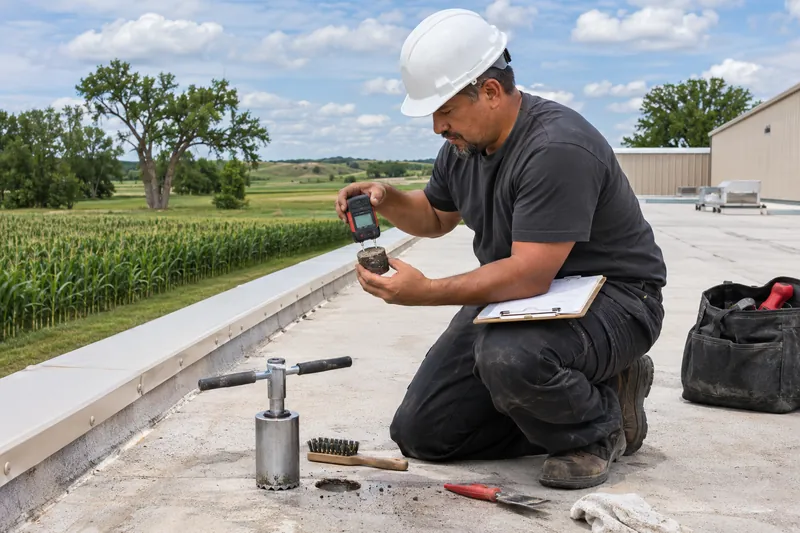
You walk the roof with us or review the photos. Each item on the list names its roof location, the problem, and the repair planned for it.
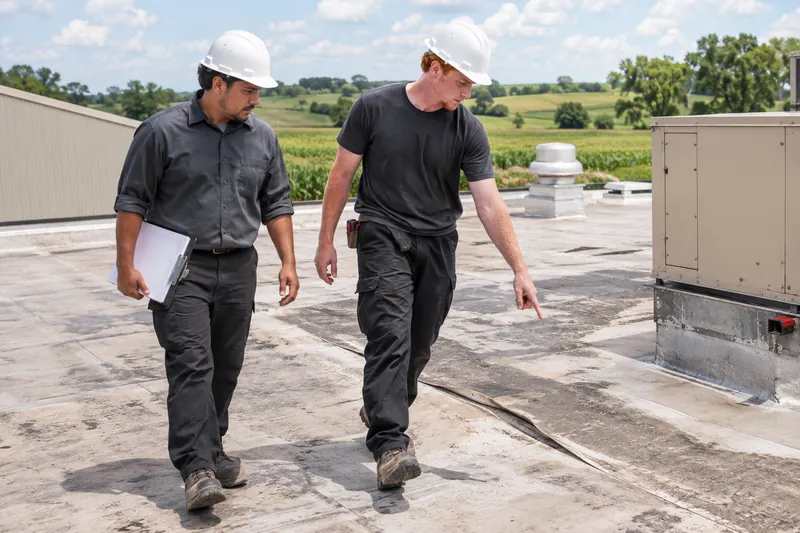
Patches, welds, and new flashing use the same membrane system already on the roof, one area at a time, so the rest of the roof stays sealed.
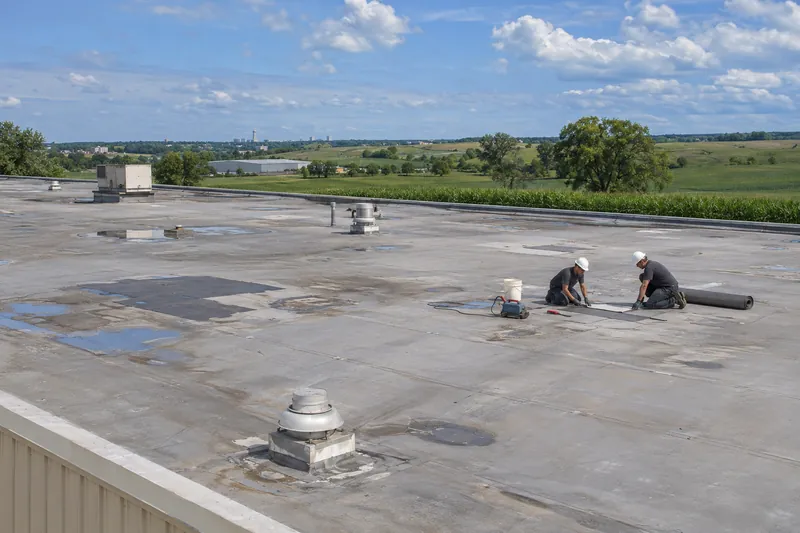
Scrap and debris come off the roof the same visit, drains get a final clear, and the repair record lists every spot that was fixed.
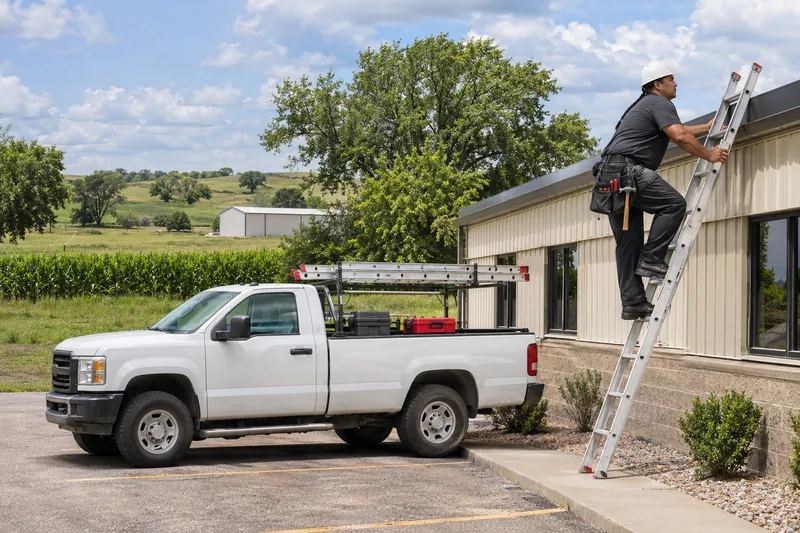
These services handle the work that often sits beside a flat roof repair.
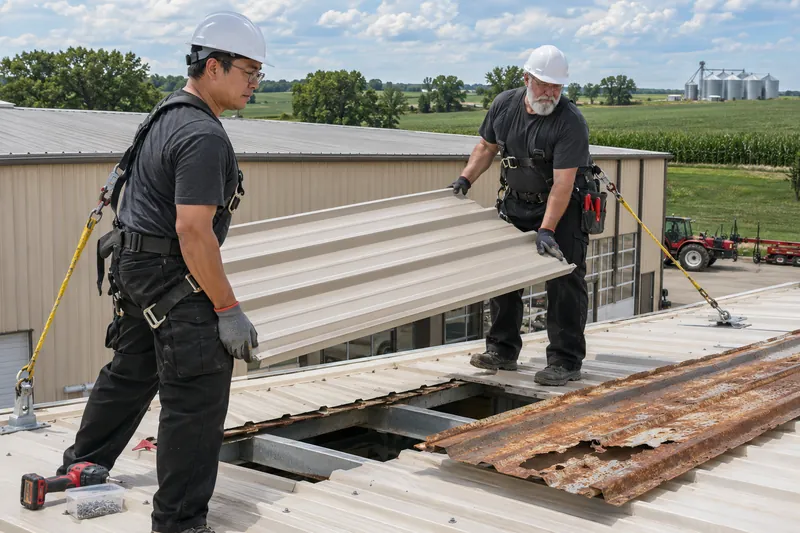
Steel roofs over shops and storage buildings with failed fasteners, open laps, or rusted panels need metal-specific repairs.
Lincoln commercial metal roof repair →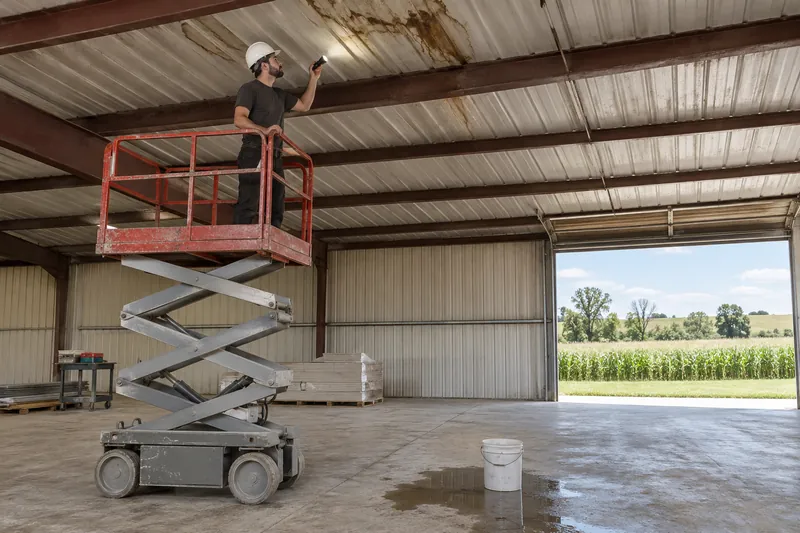
When a drip shows up with no clear source above it, leak tracing finds the entry point before any patch goes down.
Lincoln commercial roof leak repair →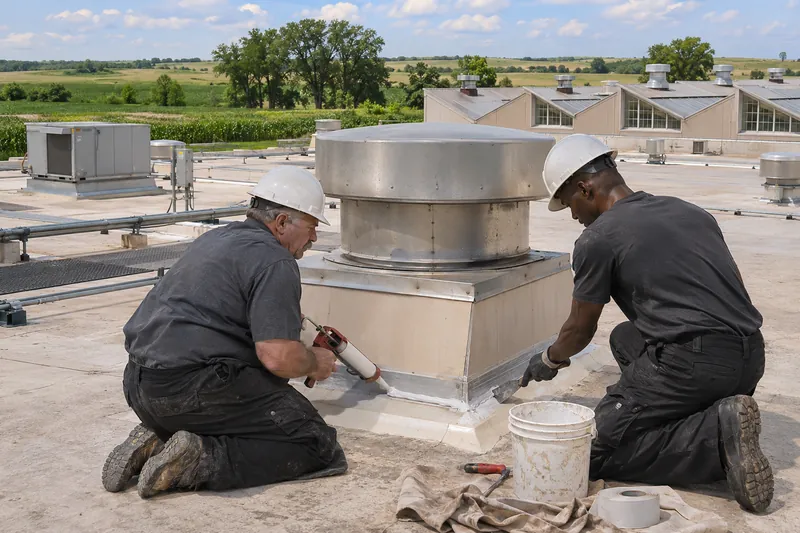
Plant roofs with exhaust fans and stacks need repairs built for heat and residue around the equipment.
Lincoln industrial roof repair →Short answers to the flat roof questions we hear on Lincoln roofs.
Heavy rain raises the water level on the roof faster than drains and scuppers can clear it. That higher water reaches seams, flashing, and laps that light rain never touches, so a roof can stay dry for months and then leak in one downpour.
Clogged drains, low spots, and open laps near parapets are the usual suspects, and we check those first.
First we find out why the water sits. Drains get cleared and tested, the deck gets checked for sag, and low spots get marked after a rain. The fix can be a tapered cricket, built-up insulation in the low area, or a new or moved drain. Membrane that sat under standing water gets inspected and patched or replaced.
Patches fit small damage on membrane that is still flexible: a puncture, a split seam, or torn flashing. The patch has to match the roof, so TPO gets TPO and EPDM gets EPDM. Around brittle, shrinking, or wet membrane a patch fails early, which is why we check the material around the damage before deciding.
Drain work covers cleaning the line, replacing the clamping ring or strainer, and resealing the membrane to the drain bowl. Most leaks at a drain come from a loose clamp or a cracked bowl. When the drain sits slightly high and leaves a ring of standing water, we lower the bowl or taper the area around it.
Yes. Meltwater refreezes in drains and scuppers, and the backed-up water works under flashing and laps. Drifts also pile up against parapets and taller walls, adding weight in one spot. A drain check before winter and an inspection of drift areas and edge flashing after the thaw catch most of this damage early.
Lincoln Building and Safety enforces the 2021 International Building Code and the 2021 International Existing Building Code, both with local amendments. Repairs to an existing roof fall under the existing building code, and roof assemblies follow the building code's roofing chapter. Before larger repair work starts, confirm permit needs with Lincoln Building and Safety.
Send a few details about the leak or the ponding area, and we will set up an inspection and a free estimate for the repair.